lunes, 31 de marzo de 2014

EUSTAT

Poverty and exclusion in Europe and the Basque Country (link)

If you click on the link above, you will see different poverty and exclusion rates in European countries compared with the one in the Basque Country.
As we can see there, poverty rates have increased since 2008 in most of the countries; mostly in Ireland, Spain, Portugal, Italy, Greece and some eastern countries.

Poverty and Exclusion:
Almost 80 million people live below the poverty line in the European Union.
Problems that arise from living in poverty may include not having enough money to spend on food and clothes, poor housing conditions, homelessness, and limited lifestyle choices that may lead to social exclusion.
Inspired by its founding principle of solidarity, the European Union joined forces with its Member States to make 2010 the European Year For Combating Poverty and Social Exclusion. The objectives were to raise public awareness about these issues and renew the political commitment of the EU and its Member States to combat poverty and social exclusion. The year also challenged stereotypes and collective perceptions of poverty.

domingo, 9 de febrero de 2014

The Green Belt Movement

THE GREEN BELT MOVEMENT:

The Green Belt Movement is a indigenous grassrouts non-governmental organisation which started in Nairobi, Kenya, in 1977. Created by the Nobel Prize Laureate Wangari Maathai, with the help of the National Council of Women of Kenya, this organisation encourages women from the area to plant trees, combat deforestation and restore their main source of fuel for cooking, creating profit.
This is where the name of the organisation comes from: a green belt of trees that protects kenyan villages from hunger and poverty.

Since Maathai started the movement, over 51 million of trees have been planted, and more than 30,000 women have been trained in forestry, bee-keeping and other trades that help them ear income. As she said, having their own possession makes them more authoritarian and powerful, they are not simple housewives any more.

However, both men and women have been organised to prevent enviromental destruction, restore what which has been damaged and change the political situation. Participants began to understan that for years they had been placing their trust in leaders who had betrayed them and that they were sabotaging their lives by not working for the common good and failing to use their natural resources
wisely. Consequently, the Green Belt Movement began to fight against land grabbing and the encroachment of agriculture into the forests.

In 1981, they got their first significant funding when the United Nations Development Fund for Women (UNIFEM) provided money that transformed the effort from a few tree nurseries to a larg number with thousands of seedlings. That helped also to mobilize thousands of women who Maathai called ‘foresters without diplomas’. Because of that, several grassroots enviroment an development groups in Ethiopia, Tanzania, Uganda, Rwanda and other African countries, integrated
this movement ́s approach.
Over the years, the Green Belt Movement incorporated other community activities apart from tree planting efforts, such as the cultivation of more nutritious and indigenous foods, effective ways store rainwater, training in entrepreneurship and providing information on AIDS prevention. 
Nowadays, it has extended its reach internationally to campaign and advocate on climate change the importance of Africa’s rainforests in the Congo, and has partnered with the UnitedNations Environment Programme (UNEP) in its Billion Tree Campaign.

After being awarded with the Nobel Prize in 2004, Professor Maathai ́s and the Green Belt Movement ́s work ́s fame raised worldwide. She was named ambassador for the Congo Basi Forest Ecosystem, the world ́s second ‘lung’ after the Amazon Rainforest. The four books she writed and the documentary ‘Taking Root: The Vision of Wangari Maathai’ expanded the key concepts behind the Green Belt Movement ́s achievements.

This NGO continued under her leadership until her unexpected death in 2011 at the age of 71; but it's still opened to every single person who would like to put its bit for helping the enviroment.


jueves, 16 de enero de 2014

"The Dictator" film, (starring Sacha Baron Cohen)

The Dictator is a 2012 American comedy film co-written by and starring Sacha Baron Cohen as his fourth feature film in a leading role. The film is directed by Larry Charles, who previously directed Baron Cohen's mockumentaries Borat and Brüno. Cohen, in the role of Admiral General Aladeen, the dictator of the fictional Republic of Wadiya visiting the United States.


Plot:


For years, the North African Republic of Wadiya has been ruled by Admiral General Haffaz Aladeen, a childish, tyrannical misogynous, anti-western andantisemitic despot who surrounds himself with female bodyguards, sponsors al-Qaeda and is working on developing nuclear weapons to attack Israel. After the United Nations Security Council resolves to intervene militarily, Aladeen travels to the UN Headquarters in New York City to address the council.

 Shortly after arriving, he is kidnapped by Clayton (John C. Reilly), a hitman hired by his treacherous uncle Tamir (Ben Kingsley), who wishes to take power. Tamir then replaces Aladeen with a mentally challenged political decoy named Efawadh. Aladeen escapes after Clayton accidentally burns himself to death, but his huge beard has been shaved off by Clayton, making him practically unrecognizable.

 Wandering through New York, Aladeen encounters Zoey (Anna Faris), a boyish activist who offers him a job at her alternative lifestyle co-op. Aladeen refuses the offer and encounters "Nuclear" Nadal (Jason Mantzoukas), the former chief of Wadiya's nuclear weapons program, Nadal explains that Wadiyan resistance was sending into exile all the people he had ordered to be executed. Wanting his old job back, Nadal promises to help Aladeen thwart Tamir's plot and regain his position as 'rightful' dictator, on condition that Aladeen makes him head of Wadiya's WMD program again. Aladeen agrees and accepts Zoey's job offer, and eventually falls in love with her.

 However, Aladeen's relationship with Zoey becomes strained after he reveals his true identity. Upon seeing Zoey, vows to democratize his country and open up Wadiya's oil fields for business, but in a way where the general populace will benefit. Angry with Aladeen staying in power, Tamir attempts to assassinate him but Efawadh jumps in front of the bullet and survives, as it is his job "to be shot in the head".

Cast:

  • Sacha Baron Cohen as President Prime Minister Admiral General Haffaz Aladeen/Alison Burgers and his mentally impaired double Efawadh.

          Megan Fox as herself.


Production:


The distributor Paramount Pictures described the film as "the heroic story of a North African dictator who risked his life to ensure that democracy would never come to the country he so lovingly oppressed." Paramount said the film was inspired by the novel Zabibah and the King by Iraqi dictator Saddam Hussein though The New York Times later reported it is not an adaptation. Baron Cohen, who also plays Efawadh in the film, based his performance primarily on Libya's Muammar Gaddafi, though his name is a reference to former longtime Syrian leader Hafez Al-Assad. The film is "dedicated to the memory of Kim Jong-il".

Globalization:


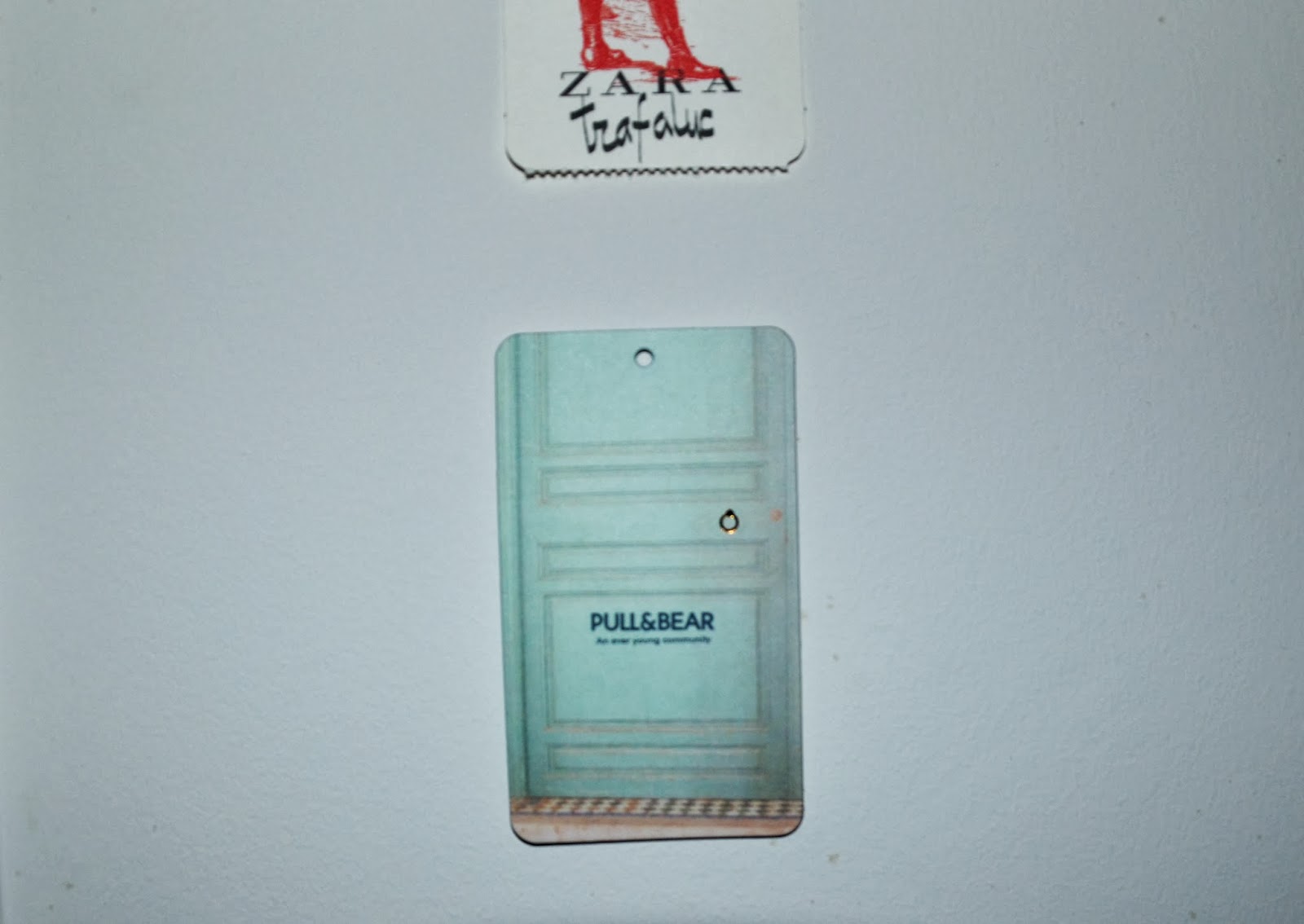
A brand that is famous all over the world: Pull & Bear

(Picture taken by me).


jueves, 9 de enero de 2014

Libyan Conflict

Libyan Conflict: (Click here to access the project).


This is a small project that Joane and I have made about the great conflict of libya. We have added information of this exotic country and how this prbloblem started a few years ago: we mention Daddafi and many others. We have also written about a movie that is relevant to this issue, but as a parody, "The Dictator." This film gives a touch of humor to what I occurred in Libya.